Grease and Cooking Residue
Degreasing targets oily films near fryers, ranges, prep equipment, and the routes employees use between the line and dish area. The process is planned to prevent loosened soil from being moved into already cleaned zones.
Serving Vancouver, Washington & surrounding areas
Restaurant Floor Cleaning · Tigard
Remove slippery grease, tracked-in soil, and stubborn buildup with a cleaning plan built around your flooring, equipment, and operating schedule.
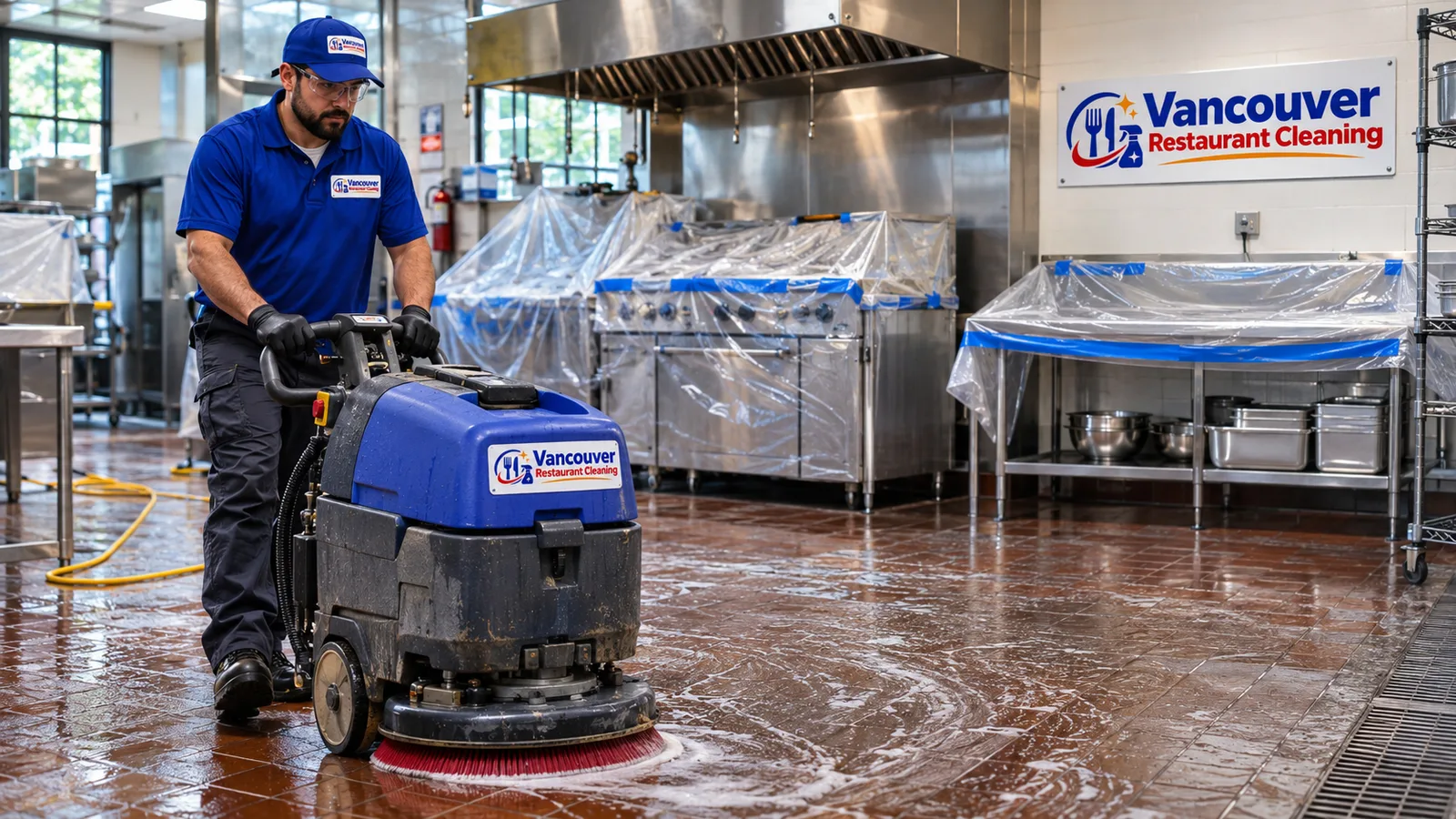
Built for Working Floors
Restaurant Floor Cleaning Tigard addresses the residue that routine sweeping and mopping leave behind. Cooking oil can spread from the line into prep areas and service corridors. Soil enters at delivery doors and customer entrances, while dirty mop water may settle into grout lines, textured flooring, edges, and low spots. The result can be a dull floor with sticky traffic lanes and reduced traction.
Vancouver Restaurant Cleaning develops the scope around the floor material, soil load, drainage, equipment layout, and hours of operation. In our role as Vancouver's trusted restaurant team, we coordinate the work so managers know which areas need to be cleared, when the floor can be used again, and what should be handled during routine maintenance between deep cleans.
Tigard restaurants near Washington Square often contend with steady customer traffic and wet shoes during the rainy season. Downtown Tigard locations may have compact kitchens where access around fixed equipment is limited. In Tigard Triangle, mixed commercial development can mean busy entrances, delivery traffic, and different flooring materials within one operation. Those conditions affect equipment choice, drying time, and how the work is divided into zones.
Commercial Floor Care
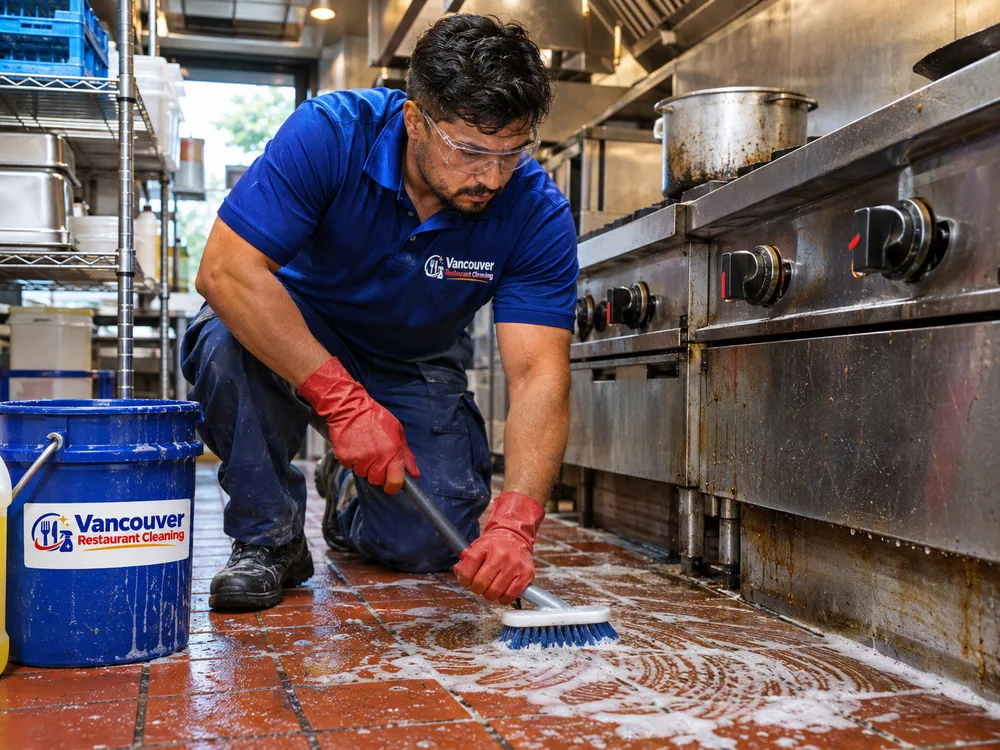
Kitchen floors need chemistry and agitation matched to the surface. A professional deep clean commonly begins with dry soil removal, followed by application of a commercial degreaser at the proper dilution. The cleaner needs enough dwell time to loosen oily residue before mechanical agitation. Technicians can then recover the dirty solution rather than spreading it with a mop.
A rotary scrubber, cylindrical brush machine, or compact auto scrubber may be used where access and flooring permit. Detail brushes address corners, grout joints, wall edges, floor-to-wall transitions, and the spaces around equipment legs. Squeegees and wet extraction help control wastewater and leave the floor ready for a clean-water rinse. The method is adjusted for quarry tile, ceramic tile, sealed concrete, vinyl composition tile, luxury vinyl tile, and commercial sheet flooring.
Restaurant kitchen deep cleaning in Tigard can cover the cook line perimeter, prep stations, dishwashing area, walk-in approaches, storage aisles, service corridors, and loading access. Food-contact surfaces and exposed ingredients must be protected before floor chemicals are used. Safety data sheet instructions, product labels, and flooring manufacturer guidance determine dilution, dwell time, rinsing, and reentry requirements.
Cleaning Coverage
Degreasing targets oily films near fryers, ranges, prep equipment, and the routes employees use between the line and dish area. The process is planned to prevent loosened soil from being moved into already cleaned zones.
Brush work removes compacted soil from grout joints, base edges, thresholds, corners, and equipment legs. These details matter because large floor machines cannot make full contact in tight spaces.
Customer-facing floors may collect tracked-in grit, beverage residue, and chair marks. Cleaning methods are selected for the finish and traffic pattern, with attention to entrances during the wet Pacific Northwest months.
Dishwashing zones can combine food residue, moisture, detergent, and mineral deposits. These areas may require focused agitation and controlled water recovery around drains and equipment connections.
Walk-in approaches and storage aisles often develop narrow traffic lanes. Cleaning is coordinated around movable stock, shelving access, and the temperature or ventilation needs of the area.
A recurring schedule can be based on cooking volume, floor texture, entry traffic, and the effectiveness of nightly maintenance. High-soil zones may need attention more often than dining areas.
From Assessment to Review
We identify flooring materials, grease sources, drains, low spots, damaged grout, fixed equipment, and areas that require special access. The walkthrough also establishes which spaces must remain available during the work.
The plan states which areas are included, the expected cleaning method, preparation responsibilities, and likely drying or reentry needs. Work can be arranged around closed hours or divided into practical zones when the operation cannot release every area at once.
Loose debris is removed, movable items are relocated as agreed, and exposed food or food-contact materials are protected. Warning signs and controlled work boundaries help keep staff out of wet areas.
The selected cleaner is applied at label dilution and given appropriate dwell time. Brushes or commercial floor equipment loosen residue from the field of the floor, grout, edges, and accessible areas around equipment.
The soiled solution is recovered, the floor is rinsed when required, and remaining problem areas receive detail work. Before turnover, we review the cleaned zones and communicate any observed damage or maintenance concerns.
Surface Safeguards
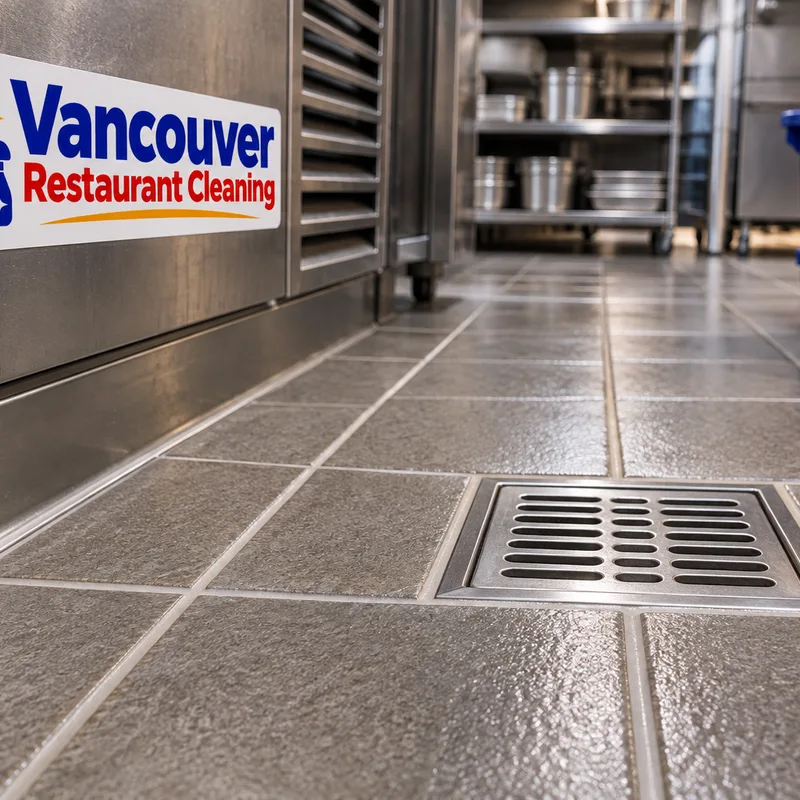
Aggressive cleaning is not always better. Excessively strong alkalinity, incorrect dilution, abrasive pads, or prolonged chemical contact can discolor finishes and damage some resilient floors. Flooding can also send water under equipment, into wall assemblies, or through failed grout. A sound plan uses the least aggressive method that will remove the soil effectively.
Quarry tile is common in commercial kitchens because its textured surface provides durable footing, but grease can lodge in that texture and in cementitious grout. Vinyl composition tile may have a finish that requires compatible chemistry and pads. Luxury vinyl tile and sheet goods need careful treatment at seams and edges. Sealed concrete must be checked for coating condition before scrubbing.
Floor cleaning also has limits. Loose tiles, missing grout, failed seams, worn coatings, and chronic standing water cannot be corrected by cleaning. We can clean accessible surfaces and identify visible concerns, but repairs should be completed before water intrusion or soil retention becomes worse. Managers should also confirm that floor drains and grease-management systems are operating correctly before a water-intensive service.
Local Scheduling
A useful cleaning schedule starts with how the restaurant actually operates. A high-volume fry line may need frequent degreasing, while a dining room with lower soil loads may need periodic machine scrubbing. Delivery days, late closing times, early prep shifts, and access to movable equipment all affect the service window.
Tigard's rainy season can increase moisture and grit at customer and employee entrances. Entry mats should be removed for cleaning, the floor beneath them should be addressed, and mats should be dry before they return to service. At restaurants serving Washington Square traffic, cleaning may need to account for extended customer hours. Smaller downtown kitchens may benefit from phased work because there is less room to stage equipment outside the cleaning zone.
The City of Tigard is in Washington County, and food establishments operate under applicable county and state food-safety requirements. Floor work should be coordinated with the person in charge so chemicals, wastewater, food protection, and employee access are handled according to the operation's policies and product instructions. Cleaning wastewater should never be directed into a storm drain.
A walkthrough can identify the grease sources, hard-to-reach areas, and scheduling constraints that should be included in a written floor-cleaning scope.
Call for a Free QuoteAnswers Before Service
Tell Vancouver Restaurant Cleaning about the flooring, problem areas, operating hours, and access limits at your Tigard restaurant. We will help define a practical scope for the kitchen and other included floor areas.