Cooking Line Equipment
Ranges, ovens, griddles, charbroilers, fryers, and hot holding units can be cleaned according to their construction and current condition. Removable components are handled only when safe and authorized.
Serving Vancouver, Washington & surrounding areas
Restaurant Equipment Cleaning · Hillsboro
Remove baked-on grease, food residue, and grime with a cleaning plan built around your equipment, operating schedule, and kitchen access.
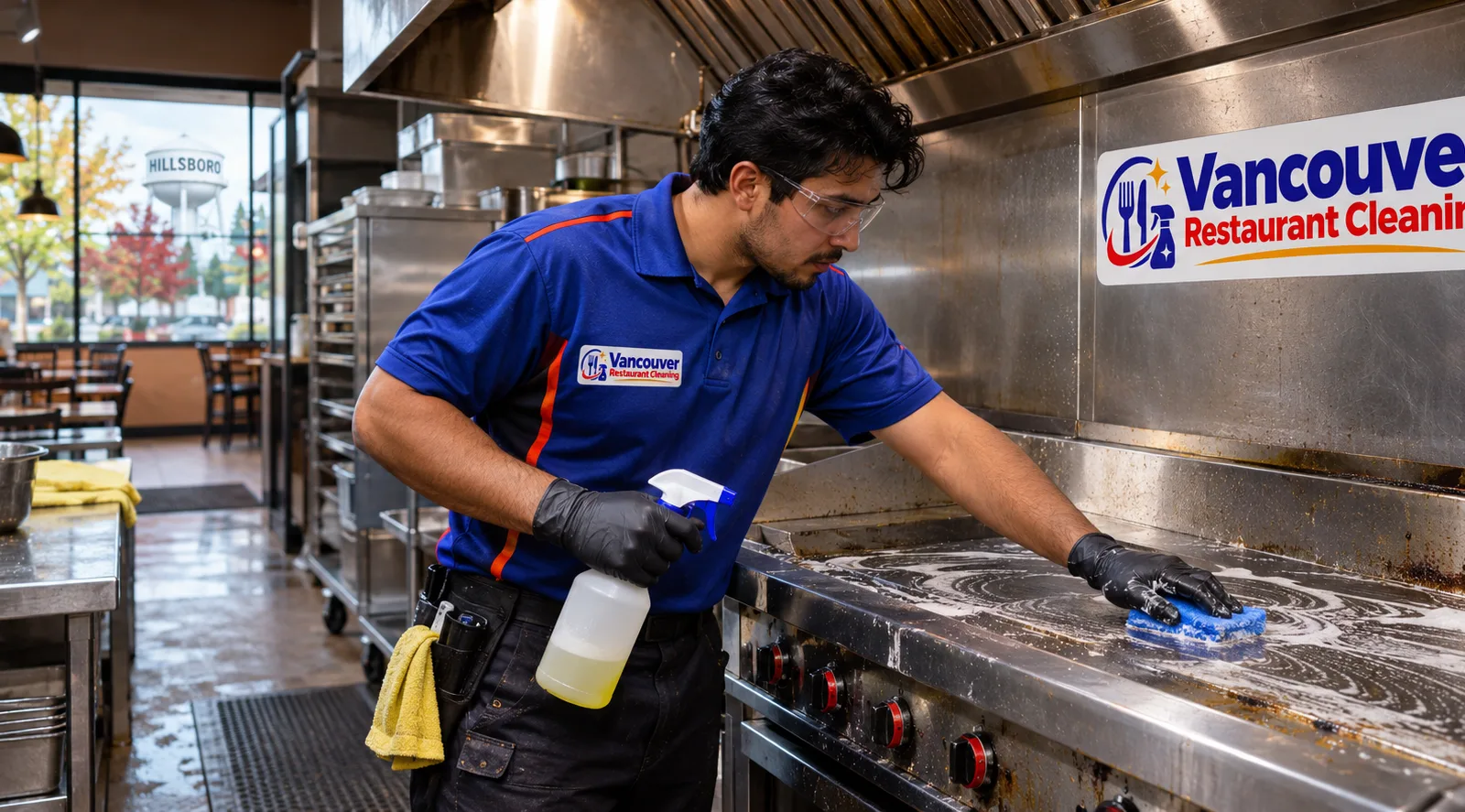
Built for Working Kitchens
Restaurant Equipment Cleaning Hillsboro addresses the buildup that routine wiping and end-of-shift cleaning can leave behind. Grease, carbonized food, crumbs, and residue collect around fryer cabinets, range components, ovens, griddles, prep equipment, and hard-to-reach edges. A planned deep clean restores a cleaner working area and makes it easier for staff to spot leaks, worn seals, loose parts, or fresh buildup.
Vancouver Restaurant Cleaning approaches each job according to the equipment present, manufacturer restrictions, soil level, and access. For commercial kitchens across the Columbia River, an experienced restaurant team in Vancouver, WA plans work with attention to shutdown windows and reopening needs. The scope is documented before cleaning begins, so managers know which equipment faces, removable parts, undersides, sides, floors, and surrounding contact areas are included.
Hillsboro has restaurants in several distinct operating settings. Downtown Hillsboro locations may have compact kitchens and limited staging space. Orenco Station businesses often work around mixed-use buildings and customer traffic. Kitchens near Tanasbourne can face busy retail schedules and shared service access. Industrial and technology campuses around the Dawson Creek area may require coordination with facility contacts or controlled loading access. These conditions affect arrival planning, equipment movement, drying time, and the order in which work is completed.
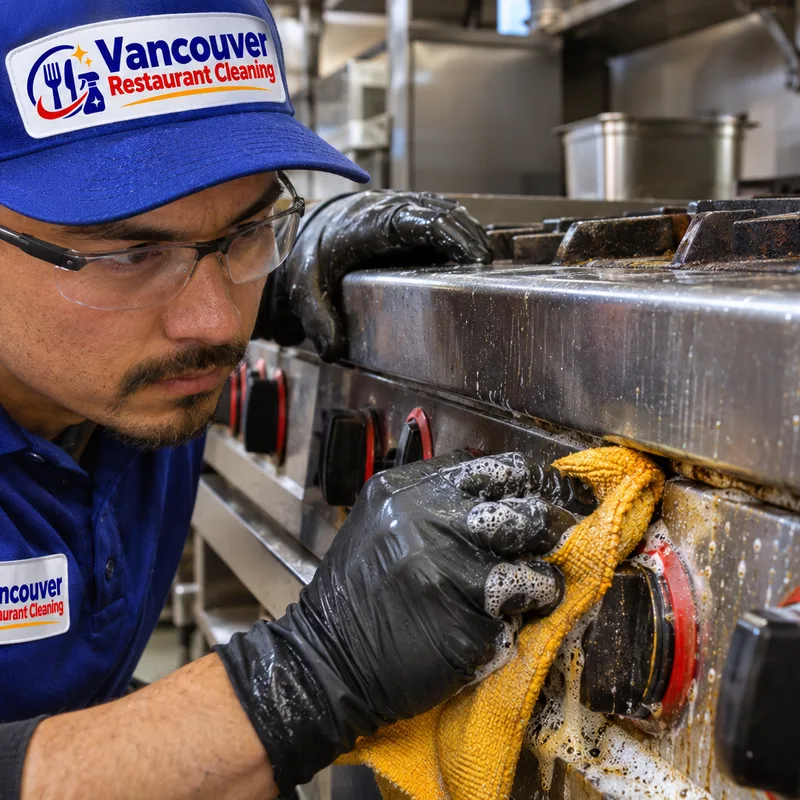
A proper scope starts with the equipment, not a generic checklist. Common items include ranges, ovens, fryers, flat-top griddles, charbroilers, hot holding equipment, stainless prep tables, mixers, slicers, and the accessible exterior surfaces of refrigeration units. Cleaning can also address casters, legs, control surrounds, equipment gaps, splash zones, and the floor exposed when movable units are pulled forward safely.
Different soils require different methods. Alkaline degreasers help break down fats and oils, while agitation removes deposits from seams and textured surfaces. Carbonized residue may need dwell time and careful scraping with tools suited to the finish. Food-contact components require compatible products, thorough rinsing when required, and sanitizing as a separate step when it is included in the scope. Electrical controls, pilot assemblies, heating elements, bearings, and data plates need controlled moisture rather than indiscriminate spraying.
Equipment cleaning is distinct from exhaust-system work. Hood plenums, ducts, and rooftop fans require specialized access and procedures. If residue extends beyond the listed equipment, the scope should identify the boundary before work starts rather than assume every kitchen surface is included.
Custom Cleaning Coverage
Ranges, ovens, griddles, charbroilers, fryers, and hot holding units can be cleaned according to their construction and current condition. Removable components are handled only when safe and authorized.
Accessible mixer, slicer, table, stand, and shelf surfaces are treated with methods suitable for stainless steel, coated metal, plastics, and other manufacturer-approved finishes.
Where access and utility connections permit, movable equipment can be repositioned to reach hidden grease, crumbs, and residue. Heavy or fixed units are cleaned within agreed access limits.
Wheels, feet, and lower frames often hold sticky debris that spreads onto surrounding floors. Detail cleaning targets these low, easily missed areas.
Doors, handles, gaskets, kick plates, and accessible exterior panels can be cleaned. Condenser or mechanical service is separate and should be completed by an appropriate technician.
The written scope can include exposed flooring, splash zones, and wall surfaces immediately around equipment, subject to finish compatibility and safe access.
From Scope to Completion
We identify the units to be cleaned, utility concerns, loading or parking arrangements, kitchen access, and the available shutdown window. Managers can flag sensitive finishes, recent repairs, or equipment that must remain in place.
Before cleaning, the crew reviews visible damage, loose components, heavy carbon, grease concentration, and surrounding surfaces. This helps separate existing wear from removable soil and establishes realistic expectations.
Food, utensils, small wares, and exposed ingredients should be removed or protected. Sensitive controls and nearby surfaces are isolated as needed, and the work area is set up to manage tools, liquids, and foot traffic.
The crew applies compatible products, allows suitable dwell time, agitates deposits, and details edges, seams, handles, legs, and accessible hidden surfaces. Methods are adjusted for stainless steel grain, coated finishes, and sensitive components.
Required residues are removed, cleaned areas are dried, equipment is returned to its agreed position, and the work is reviewed against the scope. Restaurant staff should complete any required startup checks before putting equipment back into production.
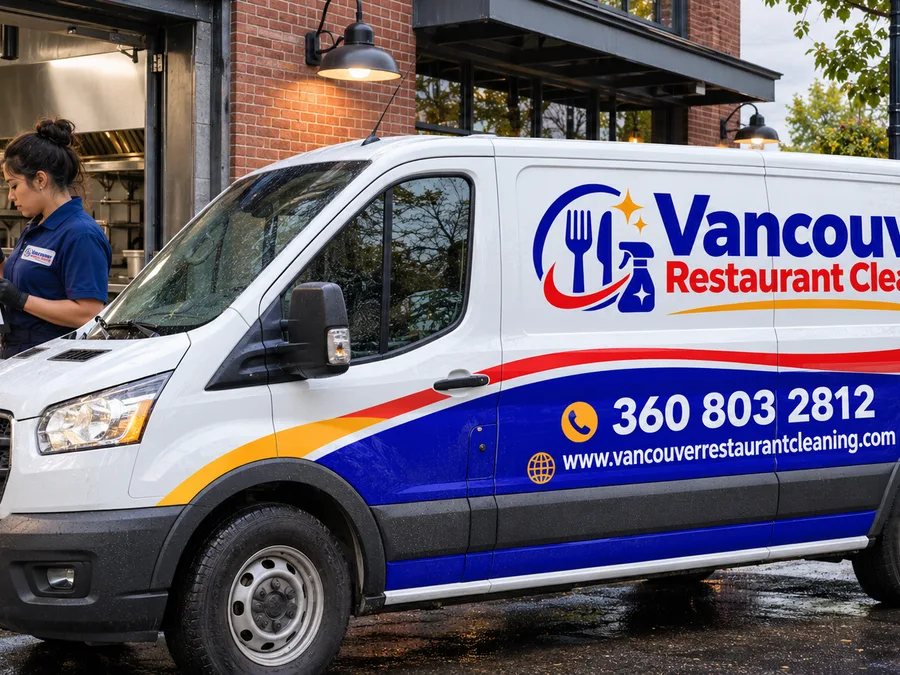
A commercial kitchen cannot always stop for an open-ended cleaning visit. The most practical plan identifies when equipment will be cool, when food production ends, which utilities staff will control, and how much time remains for drying and startup checks. Late-day, overnight, or closed-day scheduling may be appropriate depending on crew availability and the restaurant's operating hours.
Oregon's wet season also affects logistics. Rain can complicate the movement of tools and protective materials between a service vehicle and the kitchen, particularly where loading access is distant or shared. Confirming the entry route and staging area helps keep tracked-in moisture away from food preparation zones.
The restaurant remains responsible for operating manuals, lockout procedures, and decisions about disconnecting gas, electrical, or water supplies. Cleaning personnel should not perform repairs or disconnect regulated utilities unless separately qualified to do so. After cleaning, the operator or an authorized service technician should verify that equipment is correctly assembled, dry, and ready for use.
Scope and Pricing
Restaurant equipment cleaning in Hillsboro typically ranges from $400 to $1,500 for a focused kitchen visit, while extensive buildup, a large cook line, or multiple work areas may cost more. A small group of accessible units falls near the lower end; detailed cleaning behind and beneath many units takes longer.
Final price depends on equipment count, grease and carbon levels, required disassembly, utility restrictions, access, parking, and the requested work window. A written scope should state what is included and identify exclusions. The exact cost is confirmed after an inspection or detailed consultation.
Clear Expectations
Commercial cleaning proposals should name each equipment group, identify the surfaces to be treated, and state whether movement or component removal is expected. They should also address who cools down equipment, removes food and small wares, controls utilities, and approves the completed work. Those details matter more than a vague promise to deep clean the kitchen.
Ask how the crew will treat aluminum, painted surfaces, polished stainless steel, decals, control labels, and other sensitive materials. Stainless steel should generally be worked with the grain, and abrasive tools should be selected carefully to reduce scratching. Strong chemicals are not automatically better. Product choice, concentration, dwell time, mechanical action, and rinsing all affect the result.
Restaurant Cleaning Hillsboro may involve broader floors, walls, and general kitchen surfaces, but equipment cleaning deserves its own inventory and access plan. Vancouver Restaurant Cleaning can build the visit around priority units, a full cook line, or a recurring rotation. Recurring work is useful when a kitchen wants to divide heavy tasks across planned visits rather than wait for widespread buildup.
Share your equipment list, current buildup concerns, access limits, and preferred shutdown window to receive a practical scope for your Hillsboro kitchen.
Call for a Free QuoteAnswers Before Service
Tell Vancouver Restaurant Cleaning which equipment needs attention and when your kitchen is available. We will help define access, priorities, exclusions, and a realistic work window before cleaning begins.